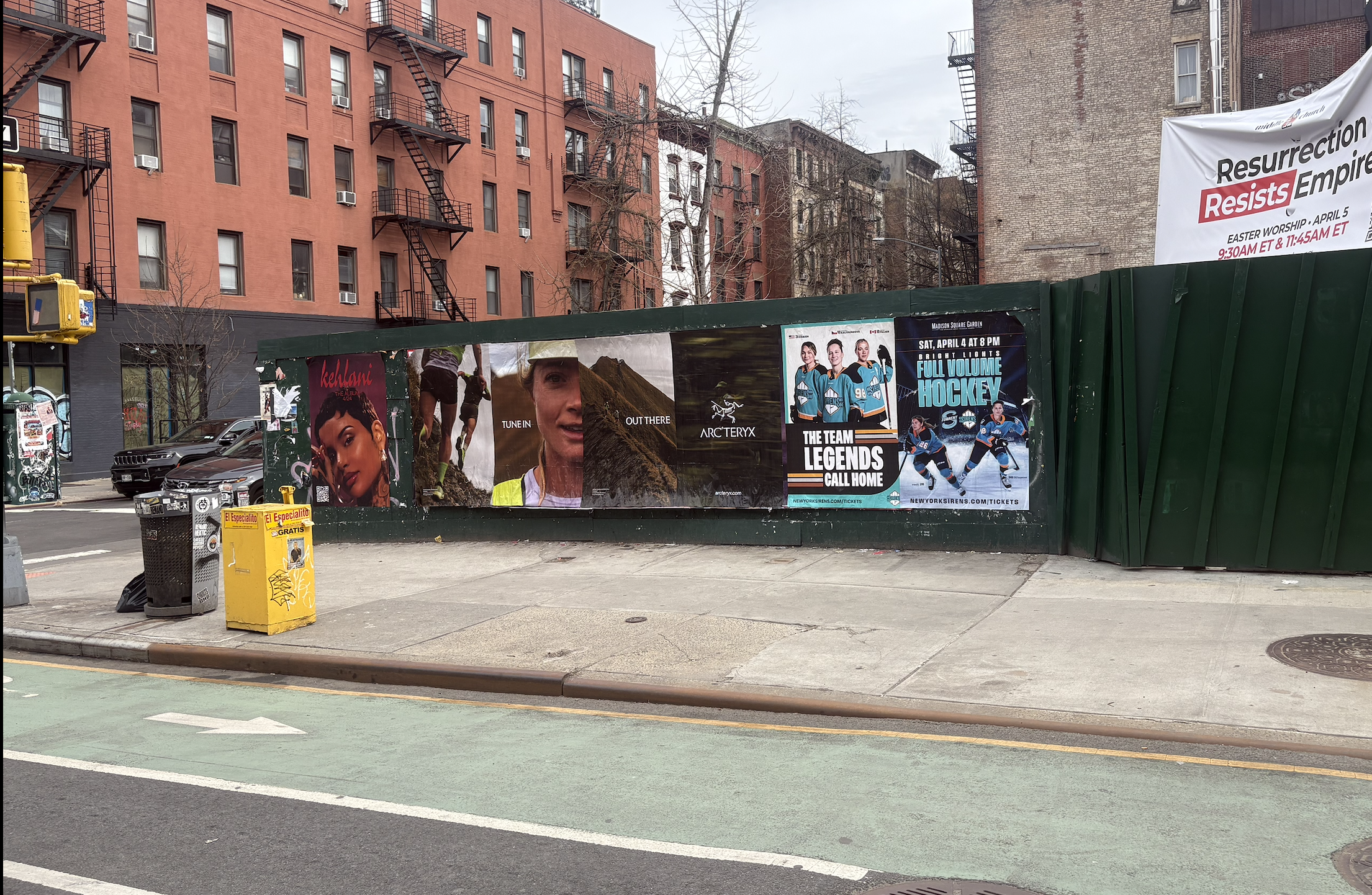
top 3 wheatpasting locations in new york city.
Wheatpasting has quietly become one of the most effective—and accessible—forms of street-level marketing in 2026. In a city like New York City, where attention is currency and visual saturation is the norm, brands are constantly searching for ways to break through the noise. Wheatpasting does exactly that: it’s bold, repeatable, hyper-local, and surprisingly affordable. From emerging startups to global brands, anyone can leverage it to make a real-world impact.
But while the barrier to entry is low, doing it well is a different story.
The biggest mistake brands make isn’t design or messaging—it’s placement. Not all walls are equal, and not all neighborhoods perform the same. After more than eight years of executing wheatpaste campaigns across Manhattan, Sauced Lab has identified the areas that consistently deliver the strongest visibility and engagement.
#1: Lower East Side
If there’s one neighborhood that defines wheatpasting culture in Manhattan, it’s the Lower East Side. This area is dense with opportunity, especially along Avenue A through Avenue D, as well as 1st and 2nd Avenue.
What makes the Lower East Side so powerful is volume and consistency. The neighborhood supports an enormous number of placements, particularly for 24x36 posters. In fact, there are roughly twice as many viable placements for 24x36 formats compared to jumbo sizes. That said, jumbo posters (48x72) tend to capture more attention when placed strategically.
From a capacity standpoint, the Lower East Side is unmatched—it can easily absorb 1,000 posters in a single day without oversaturation. That makes it ideal for brands looking to dominate a neighborhood quickly and create a sense of omnipresence.
It’s also culturally aligned with street marketing. The audience expects visual noise, engages with it, and often shares it—making it a natural fit for campaigns that want organic traction.
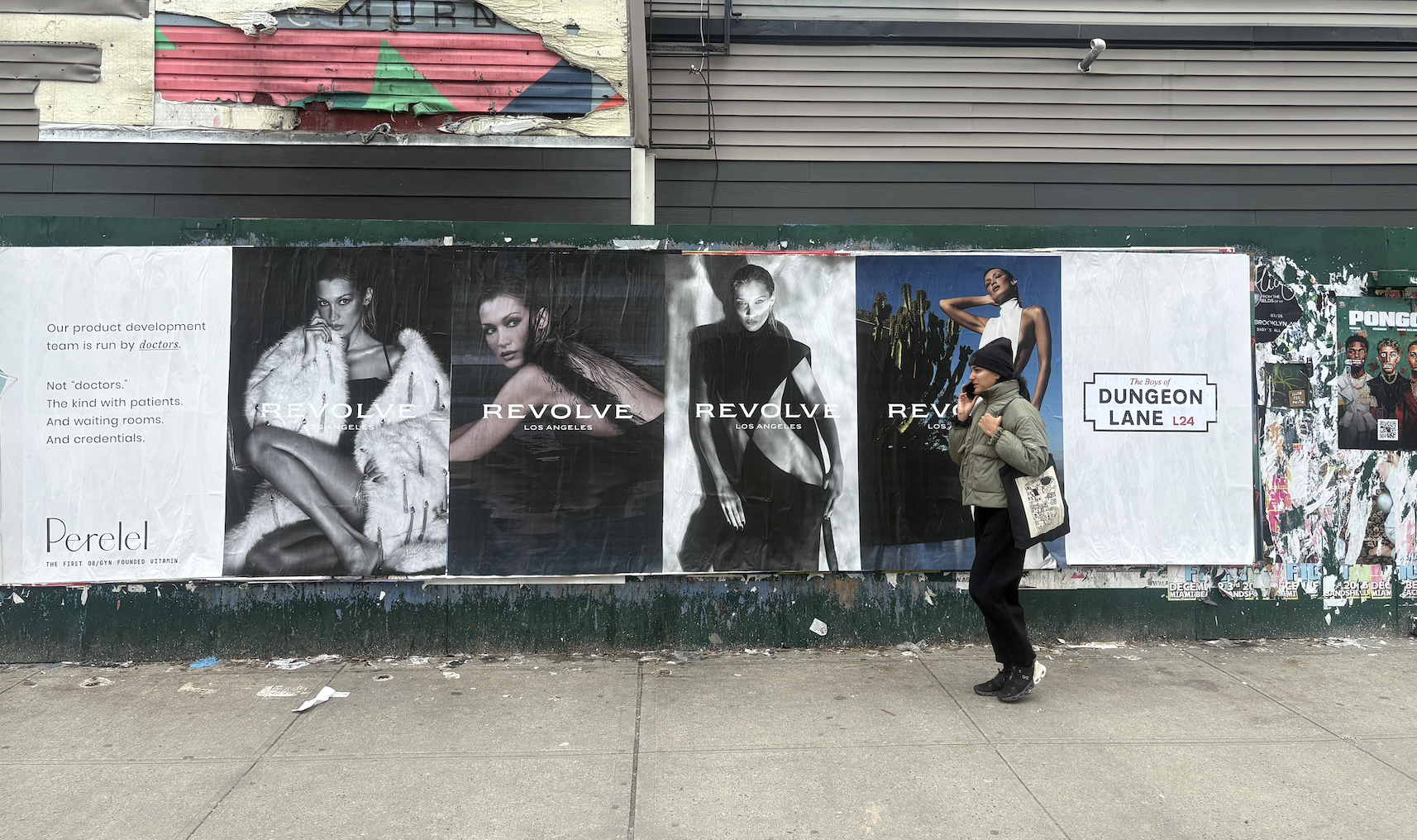
#2: Midtown Manhattan
Midtown offers something the Lower East Side doesn’t: a hybrid audience. Here, you’re not just reaching one demographic—you’re hitting working professionals, tourists, and residents all at once.
This diversity makes Midtown incredibly valuable for brands with broader messaging. Whether you’re promoting a product, event, or service, you’re guaranteed exposure to multiple audience segments throughout the day.
From a logistics standpoint, Midtown is just as scalable as the Lower East Side. It can also handle around 1,000 posters in a single day, and it works well for both 24x36 and 48x72 formats.
The key advantage here is context. A poster seen during a morning commute, a lunch break, and an evening walk hits differently each time—and Midtown delivers that repetition naturally.
#3: SoHo
SoHo is often the first neighborhood brands think of—and that’s exactly the problem.
While it has high foot traffic and strong brand visibility, it’s also one of the most competitive wheatpasting environments in Manhattan. The demand for space is so intense that most placements turn over within minutes. You could put up a poster and watch it get covered almost immediately.
This creates a challenging dynamic: you’re constantly fighting for visibility, and longevity becomes unpredictable. Roughly 85% of posting locations in SoHo experience this rapid turnover.
That doesn’t mean SoHo has no value—but it requires a different strategy. Instead of volume, it becomes about timing, frequency, and persistence. For many brands, especially those with limited budgets, it may not deliver the same return as other neighborhoods.